
Do UV Laundry Racks Really Keep Clothes Cleaner ?
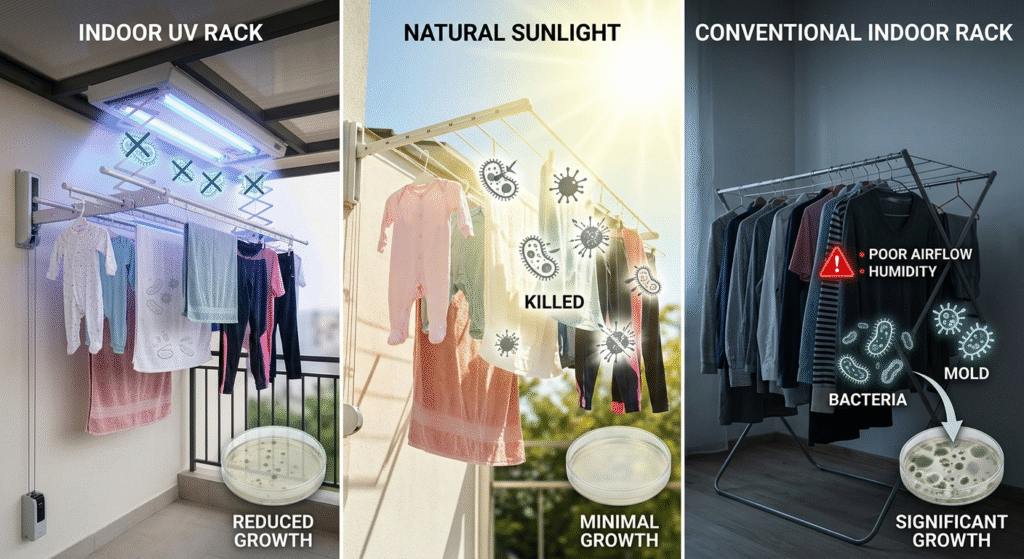
Quick answer: Yes. A well-built uv sterilisation laundry rack can cut down germs, mould spores, and dust mites on drying clothes. UV-C light damages the DNA of these tiny organisms in minutes. It will not replace washing. But it adds a real layer of hygiene. That matters most in a humid place like Singapore.
What UV Sterilisation Actually Does
UV-C light sits just outside what we can see. At this wavelength, it damages the DNA of bacteria, mould spores, and dust mites. Hospitals have used it for decades. It sterilises surfaces and air in labs, too. A uv clothes drying rack singapore puts that same idea to work at home.
Clothes hang under a UV-C lamp for one drying cycle. The light reaches the fabric and cuts down germs on it. It works best on flat, open fabric. Thick folds and seams get less direct light. So think of UV as a strong helper, not a full replacement for the wash.
Why This Matters More in Singapore
Singapore's humidity sits above 70% for most of the year. Indoor drying can take six to twelve hours, especially in the rainy season. That is a long window. It is also exactly when mould and bacteria grow the fastest.
This is why so many people search for a smart clothes drying rack that does more than just hold clothes. A rack with airflow, heat, and UV sterilisation tackles the root cause of musty smells. We break down that cause fully in our guide on why clothes smell musty after indoor drying .
The Allergy and Dust Mite Connection
Dust mites love warm, damp fabric. They feed on tiny skin flakes and moisture. Their waste is one of the most common home allergy triggers in Singapore. A laundry rack for allergies needs to do two jobs well. It must dry clothes fast. And it must cut mite and germ levels while clothes hang.
UV-C light is one of the few proven ways to cut live dust mite laundry counts without any chemicals. For homes with young kids, older family members, or anyone sensitive to dust, this feature is worth having.
What UV Sterilisation Will Not Do
Let's be honest about the limits, too.
- It will not remove stains or dirt. That is still the wash cycle's job.
- It will not fully clean thick items like towels in one short cycle.
- It cannot fix a rack stuck in a closed room with no airflow at all.
- It is not a swap for normal washing at the right temperature.
UV sterilisation is one part of a bigger system. Airflow, heat, and drying speed all matter just as much as the lamp.
How to Judge a UV Laundry Rack Before You Buy
Not every rack sold with a "UV" label does much at all. Ask these questions first.
- What wavelength does the lamp use? Real UV-C sits near 254nm. A vague answer is a red flag.
- How long is the sterilisation cycle? A useful cycle usually runs 20 to 40 minutes.
- Is the lamp shielded for safety? Direct UV-C light can hurt skin and eyes. A good design keeps it fully covered during use.
- Does it pair with strong airflow? UV light alone will not dry your clothes. Look for a rack with heat, airflow, and UV working together.
Who Benefits Most From a UV Cycle
Not every household needs this feature equally. But a few groups gain the most from it.
Families With Children
Families with babies or young children benefit most. Baby clothes touch sensitive skin directly, and a lower germ count matters more here than almost anywhere else in the home.
Allergy-Sensitive Homes
People with asthma or allergies see a real difference too. Lower dust mite and mould exposure at the drying stage can ease symptoms that flare up from indoor triggers.
Gym & Sportswear
Anyone drying gym clothes or sportswear daily also gains from it. Sweat-heavy fabric grows bacteria fast, and a UV cycle helps keep that under control between washes.
Even without any of these factors, a UV cycle adds a layer of hygiene most households simply do not think about. It runs quietly in the background while the rack does its normal job of drying.
UV Sterilisation vs Sunlight
Many people assume sunlight does the same job. It partly does. UV-B and UV-A rays in sunlight kill some germs, too. But outdoor drying is not always possible here, especially in the wet months. And sunlight cannot be timed or controlled the way a built-in UV-C lamp can. An indoor rack gives you the same result every time, rain or shine.
How to Get the Most Out of a UV Cycle
A UV lamp only works well if you use it the right way. A few small habits make a big difference.
Maintenance and Lamp Life
Most UV-C lamps in home laundry racks last one to two years with daily use. Output fades slowly before a lamp fails outright, so cycles become less effective over time even if the light still turns on. Check your manufacturer's guide for a replacement schedule, and keep a spare bulb on hand if your model allows an easy swap. A rack with a built-in usage counter makes this simple. It tells you exactly when the lamp needs changing, instead of leaving you to guess.
Frequently Asked Questions
Does a UV sterilisation laundry rack kill dust mites ?
Yes. UV-C light damages dust mite DNA and cuts live counts on exposed fabric after a full cycle. Thick or folded fabric gets less direct light, so results vary by fabric type.
Is UV light from a laundry rack safe for my family ?
Yes, when the lamp is shielded and built for home use. It runs during the drying cycle, not while clothes are being handled. Good units also include a safety cut-off switch.
Can a UV clothes drying rack replace washing ?
No. It cuts germs, mould, and mites on clothes that are already washed. It does not remove stains, and it does not replace detergent or water.
Is a UV laundry rack worth it for allergy sufferers ?
Often, yes. Cutting dust mite and mould levels at the drying stage can lower the total allergen load in your home. This matters most for homes that dry laundry indoors all year.
Have more questions about our UV cycle? Visit our FAQ page for full details on cycle times and upkeep.