
Are Automated Laundry Racks Worth It in Singapore ?
Are Automated Laundry Racks Really Worth It?
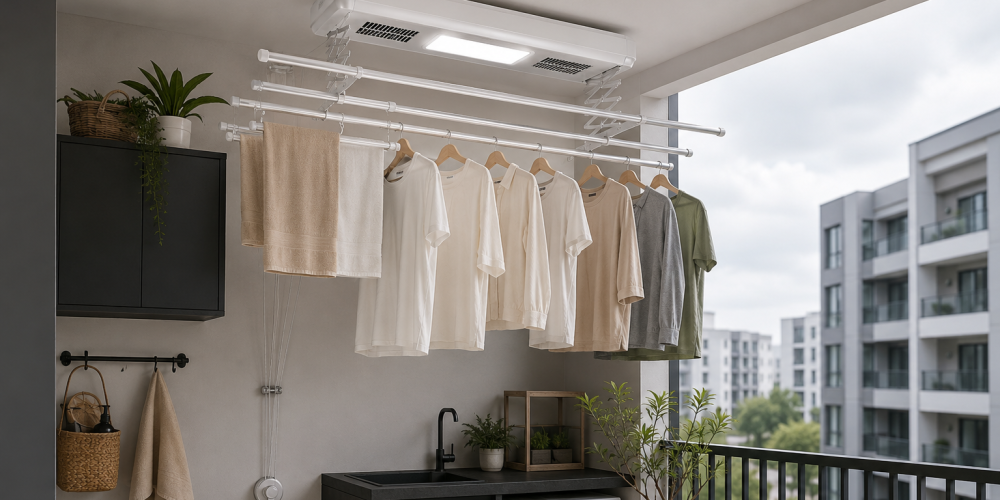
Automated laundry racks have become a popular upgrade for HDB flats, BTO homes and condominiums across Singapore. By combining motorised lifting with optional heated drying, high-speed fans and built-in lighting, they offer a more convenient way to dry clothes while making better use of limited service yard space.
However, they are not the perfect solution for every household. The overall value depends on your available drying space, laundry routine, budget and the features you expect to use every day. For some families they become an essential household appliance, while others may find a traditional drying setup more practical.
At a Glance
If you regularly do laundry, live in an apartment and want a cleaner, more organised drying area, an automated laundry rack is usually a worthwhile investment. Before choosing a model, compare its drying performance, installation requirements, warranty coverage and long-term running costs instead of focusing only on the purchase price.
Save Space
Ceiling-mounted designs free up valuable floor space and keep service yards neat and organised.
Dry Clothes Faster
Selected models use heated air and high-speed fans to improve drying performance during humid weather.
Worth the Investment?
For many Singapore households, the added convenience and everyday practicality justify the higher upfront cost.
The Case for Automated Laundry Racks
For many Singapore households, automated laundry racks solve everyday drying challenges that traditional racks cannot. From saving space to improving convenience during rainy weather, they provide practical benefits that continue long after installation.
Make Better Use of Limited Space
One of the biggest advantages of an automated laundry rack is how efficiently it uses the ceiling instead of taking up valuable floor space. This is especially useful in HDB flats and BTO homes where service yards are compact and every square metre matters. By lifting clothes overhead, homeowners can move around more comfortably and keep the area organised.
Lower Running Costs Than Expected
Many people assume automated laundry racks are expensive to operate, but the actual electricity cost is relatively low for normal household use. Models with heated drying and fans are designed to improve drying efficiency while using significantly less energy than many people expect, making them practical for everyday laundry.
More Hygienic Drying
Many GoodLiving models include built-in sterilisation and ioniser functions that help reduce bacteria, unpleasant odours and airborne particles while clothes are drying. This creates a fresher drying environment and can be particularly beneficial for families with young children or allergy concerns.
Convenient in Singapore's Weather
Frequent rain and high humidity often make outdoor drying unreliable. Automated laundry racks equipped with heated drying and high-speed fans allow clothes to dry more consistently, reducing the need to wait for sunny weather or move laundry indoors when rain starts unexpectedly.
Where an Automated Laundry Rack Falls Short
Although automated laundry racks provide many practical benefits, they are not the right solution for every household. Understanding their limitations helps you decide whether the additional investment matches your lifestyle and drying needs.
Higher Upfront Cost
Compared with a traditional drying rack, an automated laundry rack requires a larger initial investment. While premium models include advanced features such as heated drying, high-speed fans and smart controls, these additions naturally increase the purchase price. For homeowners with simple drying needs, the extra features may not always provide enough value to justify the higher cost.
Installation Requirements
Unlike a portable drying rack, an automated model needs professional installation. Ceiling type, electrical access and available space all influence whether installation is suitable. While most HDB flats and condominiums are compatible, some older homes or unique ceiling layouts may require additional assessment before installation.
Not Every Home Needs One
Homes with large outdoor drying areas, landed properties or households that only do small amounts of laundry may already have an effective drying solution. In these situations, the convenience of an automated laundry rack may not outweigh the additional investment.
Choosing the Right Model Matters
The benefits of an automated laundry rack depend heavily on selecting a model that suits your household. Buying a model with insufficient drying capacity or paying for premium features that you do not need can reduce the overall value of your investment. Comparing specifications and understanding your daily laundry habits will help you make a more informed decision.
Automated Laundry Rack vs Tumble Dryer
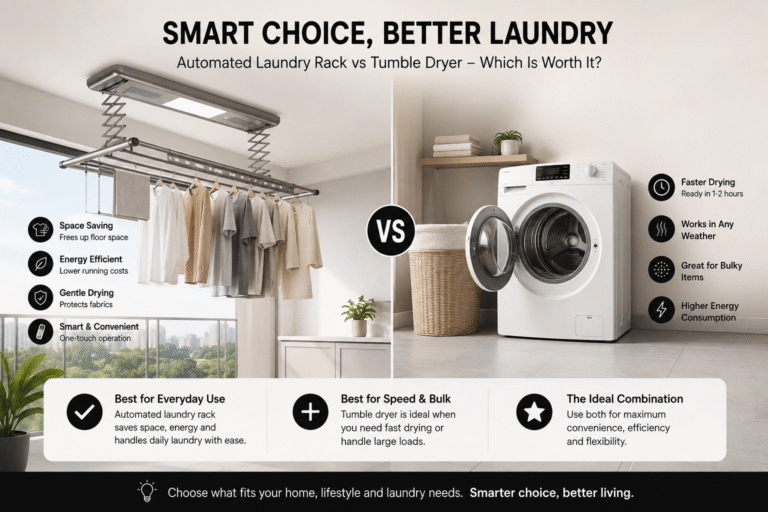
Both appliances help solve different drying challenges, but they work in very different ways. An automated laundry rack focuses on gentle everyday drying and efficient use of space, while a tumble dryer prioritises speed at the expense of higher energy use and fabric wear. Comparing their strengths side by side makes it easier to decide which option suits your household.
Which Option Offers Better Value?
For most HDB flats, BTO homes and condominiums, an automated laundry rack is often the more practical everyday solution because it saves space, protects clothing and operates with relatively low running costs. A tumble dryer remains useful for households that regularly need very fast drying, especially during extended periods of wet weather. Many families eventually choose to use both appliances together, allowing each one to complement the other based on different laundry needs.
Do You Really Need Both?
An automated laundry rack and a tumble dryer are designed for different purposes. One focuses on everyday convenience and efficient drying, while the other is built for speed. Understanding how they complement each other makes it easier to decide whether investing in both appliances is worthwhile.
For most Singapore homes, an automated laundry rack becomes the primary drying solution, while a tumble dryer works best as a backup for urgent loads, heavy bedding or extended periods of rainy weather.
Rather than replacing each other, these appliances solve different problems. Many homeowners start with an automated laundry rack because it saves space and reduces daily effort, then add a tumble dryer later if their lifestyle requires faster drying.
Choose an Automated Laundry Rack If...
For most HDB flats, BTO homes and condominiums, an automated laundry rack provides everything needed for everyday laundry while keeping electricity costs relatively low.
- ✔ You wash clothes several times each week.
- ✔ Saving floor space is important.
- ✔ You want gentler drying for delicate fabrics.
- ✔ You prefer a cleaner and more organised service yard.
- ✔ You want a convenient long-term solution.
Add a Tumble Dryer If...
A tumble dryer becomes valuable when your household regularly needs clothes dried as quickly as possible or handles large laundry loads throughout the week.
- ✔ Large family with frequent washing.
- ✔ Need clothes ready within an hour.
- ✔ Regularly dry thick blankets and towels.
- ✔ Enough room for another appliance.
- ✔ Speed matters more than energy consumption.
Our Recommendation
For most Singapore households, an automated laundry rack should be the first investment because it delivers the greatest improvement to everyday laundry. It saves space, protects fabrics and provides reliable drying throughout the year. A tumble dryer is best viewed as a complementary appliance that adds extra convenience when speed becomes the priority.
Best Choice
Automated laundry rack for daily use and long-term convenience.
Ideal Combination
Laundry rack for everyday drying with a tumble dryer available for urgent loads.
Who Benefits Most
Families, apartment owners and anyone looking for a cleaner, more efficient drying routine.
Who Should Skip an Automated Laundry Rack?
While automated laundry racks are an excellent choice for many Singapore homes, they are not essential for every household. If your current drying setup already meets your needs, you may not benefit enough from the additional investment.
You May Not Need One If...
Some households already have drying arrangements that work well without requiring additional features or automation.
- You live in a landed home with plenty of outdoor drying space.
- Your laundry volume is small and infrequent.
- You rarely experience drying problems.
- You are satisfied with a traditional ceiling rack or clothesline.
- You don't require heated drying or smart features.
It's Worth Considering If...
For many apartment owners, an automated laundry rack can significantly improve everyday convenience and make better use of limited space.
- You live in an HDB flat, BTO or condominium.
- Your service yard is compact.
- You frequently dry clothes indoors.
- You want cleaner, more organised laundry spaces.
- You value convenience and long-term usability.
Think About Your Daily Routine
The best laundry solution depends on how you actually use it. Rather than focusing only on features or price, consider your available space, household size, drying habits and how often Singapore's weather affects your laundry. Choosing a model that matches your lifestyle will provide far greater long-term value than simply buying the most advanced option.
Is an Automated Laundry Rack the Right Choice?
The best laundry solution depends on your home, lifestyle and drying habits. Rather than focusing only on price, consider how much time, space and convenience you could gain over the years.
Before You Make Your Decision
If you live in an HDB flat, BTO or condominium and regularly dry clothes indoors, an automated laundry rack can make daily laundry simpler and more efficient. Choosing the right model is often more important than choosing the most expensive one.
Measure your service yard and ensure the model fits comfortably.
Larger families benefit from higher-capacity models.
Look beyond price and consider warranty, drying performance and after-sales support.
Only pay for smart controls or premium functions if you will use them regularly.
Who Will Benefit Most?
Automated laundry racks offer the greatest value for homeowners who want to save space, improve drying efficiency and make everyday laundry more convenient without relying solely on outdoor weather.
• BTO Homes
• Condominiums
• Growing Families
• Homes with Limited Service Yard Space
Frequently Asked Questions
Are automated laundry racks worth it in Singapore ?
For most households dealing with rain, humidity, or limited drying space, yes. They typically cost $6 to $12 a month to run and remove the guesswork of drying laundry around the weather. They’re less essential for landed homes with strong sun access and no real drying complaints.
Automated laundry rack vs dryer, which should I buy ?
Buy the automated rack first for everyday Singapore laundry. It costs less to run, fits bulkier items like bedsheets, and uses ceiling space instead of floor space. A tumble dryer still has an edge for fast, small, urgent loads.
Do I need one if I already have a dryer ?
Not strictly, but most people who own both end up using the rack for daily laundry and keeping the dryer for occasional urgent loads. If your current dryer setup already works well for you, you can reasonably skip the extra purchase.
How long do automated laundry racks last ?
GoodLiving’s Platinum models carry up to a 10-year motor warranty and a German DC motor rated for around 20 years of use. Swift models carry a 5-year motor warranty.
What's the real running cost per month ?
Typical use adds roughly $6 to $12 a month to an electricity bill, based on current SP Group tariff rates. Most of that cost comes from the heaters, since the fans alone use very little power.
Who should not buy an automated laundry rack ?
Landed homeowners with a full sun-drying yard, short-term renters who can’t install one, households already satisfied with an existing dryer, and anyone for whom the upfront cost is a genuine stretch right now.
An automated laundry rack isn’t a must-have for every home in Singapore, but for the households it suits, it earns its keep fast. If that sounds like your household, compare the full range on the products page or book a free showroom demo at Paya Lebar or Woodlands to see one running in person before you decide.