
Are Laundry Racks Better Than Dryers ?
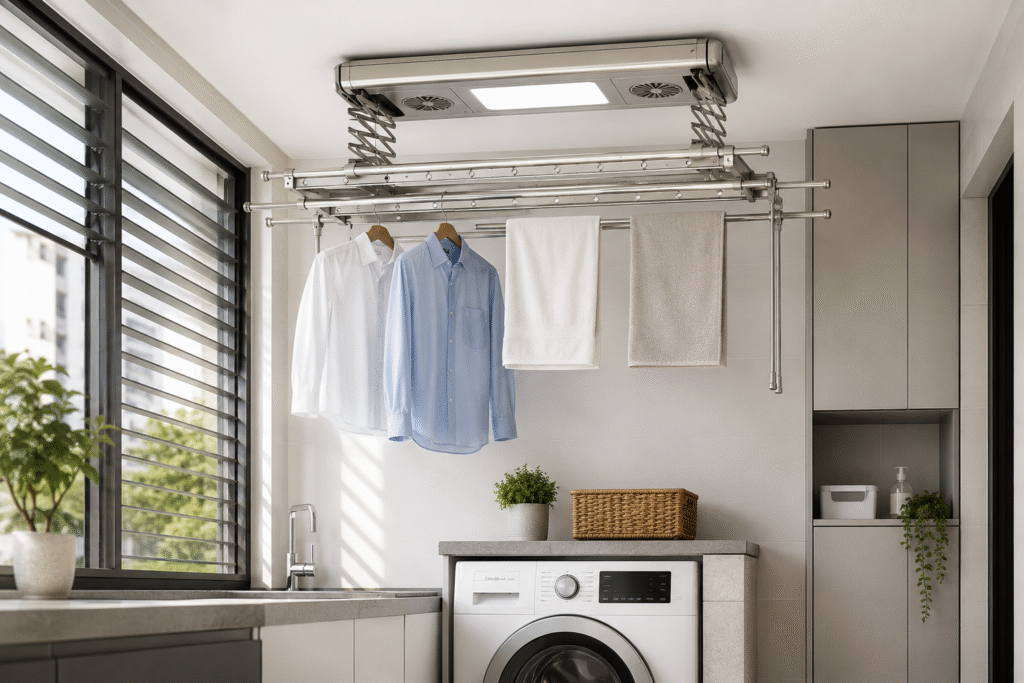
For many Singapore households, a ceiling-mounted laundry rack is better for everyday drying because it saves floor space, keeps clothes hanging naturally, and can use fans or heated air only when needed. A tumble dryer is better when speed is the main priority and you want clothes fully dried inside a machine.
The better choice depends on your home, laundry volume, fabric types, available space, and how quickly you need each load.
If you are comparing electric clothes dryers vs traditional methods, it helps to separate three options: a tumble dryer, a normal drying rack, and an automated laundry rack.
What Is the Difference?
Tumble Dryer
A tumble dryer uses a heated drum and moving air to remove moisture from clothes. It can dry a full load quickly without needing hanging space.
Traditional Drying Rack
A traditional drying rack holds clothes while they air-dry. It uses little or no electricity, but drying speed depends on airflow, temperature, and humidity.
Automated Laundry Rack
An automated laundry rack keeps the hanging method but adds motorised lifting. Selected systems also include fans, heaters, lights, timers, and smart controls.
You can compare GoodLiving automated racks by size and features.
Which Option Is Better for Singapore's Climate?
Singapore's humidity and frequent rain can make natural indoor drying slower. A basic laundry drying rack in Singapore may work well on a bright, breezy day but take longer when the air is damp.
Laundry Rack vs Dryer: Space
For small homes, the rack usually has the advantage. A tumble dryer needs permanent floor or stacked appliance space. A foldable indoor clothes drying rack also needs floor space while it is open.
A ceiling-mounted automated rack uses the space above the service yard instead. It can be raised when not in use, leaving the floor clearer. In a narrow HDB or condo service yard, this can be a major practical benefit.
Laundry Rack vs Dryer: Drying Speed
The dryer usually wins on pure speed. It is designed to remove moisture quickly inside a controlled drum and can be useful when uniforms, towels, or bedding are needed within a short period.
A normal rack is slower because it relies on the surrounding air. An automated rack can reduce that gap by adding fans and warm air. GoodLiving models such as the Platinum Pro 3.0 and Platinum Pro Ultra use assisted drying features.
An automated rack is still not the same appliance as a tumble dryer. Drying time varies with fabric thickness, load spacing, room airflow, and the functions used.
Laundry Rack vs Dryer: Fabric Care
A rack is often the gentler option for clothes that are meant to hang dry. Garments stay in place instead of moving inside a drum.
This can be useful for shirts, sportswear, delicate fabrics, and clothing that should not be tumble dried. A tumble dryer is convenient for suitable fabrics, but care labels should always be checked.
Laundry Rack vs Dryer: Electricity Use
A traditional drying rack uses no electricity unless you add a separate fan or dehumidifier. An automated rack uses electricity for its motor, lights, fans, and heaters, but you can choose which functions to run.
A tumble dryer uses electricity throughout its cycle because the drum, airflow system, and heating or heat-pump system work together. Actual running cost depends on the product, cycle, load, and electricity rate.
Compare rated power and expected usage instead of assuming every option costs the same. GoodLiving also has an existing guide to electric clothes dryers vs traditional methods .
Laundry Rack vs Dryer: Capacity
A tumble dryer has a drum capacity, usually matched to a set weight of laundry. A drying rack depends on pole length, hanger points, spacing, and lifting capacity.
Tumble Dryer
Capacity is determined by the drum size and the recommended laundry load for the appliance.
Automated Laundry Rack
Capacity depends on pole length, hanger points, available spacing, and the rack's maximum lifting capacity.
Larger automated racks can hold several rows of clothing and bulky items such as bedsheets. The Platinum Pro 3.0 uses an eight-pole layout, while the Platinum Pro Ultra offers seven long poles.
A family that washes many shirts and large hanging items may value pole space more than drum capacity.
Laundry Rack vs Dryer: Convenience
Both can be convenient in different ways. A dryer reduces hanging work. You move clothes from the washer into the dryer, choose a cycle, and remove them after drying.
An automated rack still requires hanging, but motorised lifting makes the process easier. You can lower the poles to a comfortable height, load them, and raise the system by remote control. Selected models also offer app control.
Laundry Rack vs Dryer: Installation
A tumble dryer needs suitable floor or stacking space, power, and the correct conditions for the appliance type. A ceiling rack needs a suitable mounting area and power supply.
The rack must also lower without hitting cabinets, windows, lights, or the washing machine. Professional measurement can confirm the model size, ceiling position, and pole extension space before installation.
Which Is Better for HDB Flats and Condos?
For many HDB and condo households, an automated rack can be more space-efficient than a separate tumble dryer. It uses ceiling space that might otherwise be unused and gives you the option to air-dry, use fans, or add heat.
A dryer may still be better if you need very fast drying or do not want to hang clothes. Some households use a rack for most loads and a dryer for urgent items.
When Is a Traditional Drying Rack Still Enough?
A basic drying rack may be enough if you have good airflow, plenty of space, small laundry loads, and no problem waiting longer for clothes to dry.
However, a floor rack can become inconvenient in a compact home. It may block walkways and need to be moved every time you do laundry.
When Is an Automated Rack the Better Choice?
Consider an automated drying rack if your service yard has limited floor space, you prefer to hang clothes, humid weather often slows drying, or you want optional fan and heated drying.
It can also suit households that wash bulky hanging items or want motorised lifting instead of manual ceiling poles. Compare models at the GoodLiving products page and check common questions in the FAQ .
Final Answer: Are Laundry Racks Better Than Dryers?
A laundry rack is better when space efficiency, fabric-friendly hanging, and flexible energy use matter most. A tumble dryer is better when the fastest possible drying and minimum hanging work are the main priorities.
For many Singapore homes, an automated rack offers a useful balance. It keeps the benefits of hang drying while adding powered airflow, heat, and easier lifting.
Before choosing, look at your service yard, laundry habits, fabric care needs, and how often you need urgent drying. The best system is the one that fits the way your household actually does laundry.
Frequently Asked Questions
Is an automated laundry rack better than a tumble dryer ?
It can be better for homes that value ceiling space, hang-dry fabric care, and flexible fan or heat use. A tumble dryer is usually better when very fast drying is the top priority.
Can I dry bedsheets on an automated rack ?
Yes, if the rack has enough pole length and load capacity. Check the model specifications and spread large items so air can move around them.
Does an indoor clothes drying rack cause dampness ?
Wet clothes release moisture into the surrounding air. Good ventilation helps. Fans, open windows, or other airflow can reduce slow drying and moisture build-up.
Should I buy both a dryer and an automated rack ?
Some households benefit from both. The rack can handle everyday laundry, while the dryer can be reserved for urgent loads or items that are suitable for tumble drying.